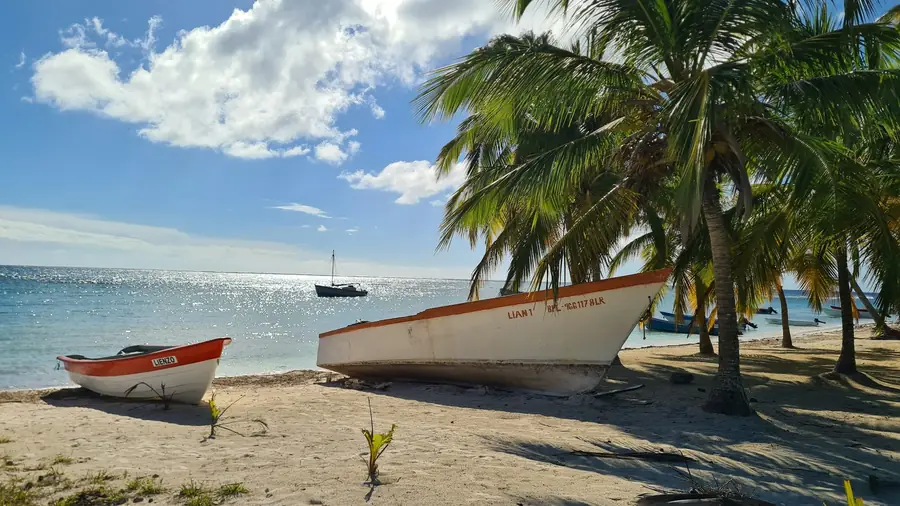
Isla Saona · Photo: Holger Woizick / Unsplash
Saona Island & Cotubanamá National Park (2026): the official fee, the rules and starfish etiquette
What the Ministry of Environment actually charges and enforces at Saona: the RD$250 SINAP fee (and why RD$500 still circulates), what a Category II national park allows, the decrees on starfish, coral, turtle shell and conch, and the 2024 Bayahibe enforcement measures. Official sources only, checked 19 October 2026.
5 min read·Updated 2026-10-19·Every fact sourced
Isla Saona is not a private beach that tour companies rent: it is part of Parque Nacional Cotubanamá, a national park run by the Ministry of Environment and Natural Resources (Medio Ambiente) between La Romana and La Altagracia provinces. The park was declared in 1975 (Decree 1311), was called Parque Nacional del Este until 2014, and covers 310 km² (Medio Ambiente). That status is why there is an entry fee, why some things you see sold on the beach are illegal, and why your guide asks you not to pick up the starfish.
This guide pulls together what the official sources say, in one place, for visitors and for anyone planning a group day, a proposal or a small ceremony on the island. For operators, departure points and published tour prices, see our Saona tours comparison.
The entry fee: RD$250, and how it compares
The Ministry of Environment sells protected-area entries through SINAP, its online visits portal. Its public park list gives Parque Nacional Cotubanamá a fee of RD$250 for Dominicans and RD$250 for foreigners. For comparison, the same list prices Cueva de los Tres Ojos in Santo Domingo at RD$100 for nationals and RD$200 for foreigners, Parque Nacional El Morro in Monte Cristi at RD$100 and Valle Nuevo at RD$150 (all read 18–19 October 2026). Cotubanamá is the only one of these four with no surcharge for foreigners.
The SINAP list also shows a 'daily capacity' of 600 for Cotubanamá. We could not find an official explanation of what that field covers, and it is clearly not a cap on Saona boat visitors: the ministry itself counts more than a million visitors a year to the island (Medio Ambiente). Treat it as an internal figure, not a booking limit.
Why you may read RD$500: in April 2017 the ministry raised the park bracelet from RD$100 to RD$500, Bayahibe's tourist transport stopped work in protest (Diario Libre), and two days later the increase was withdrawn after a meeting with tour operators (Infotur Dominicano). Older blogs never caught up.
Most tours include the fee. SeavisTours lists park fees among its inclusions and Caribbean Saona says the Cotubanamá tax is included (SeavisTours, Caribbean Saona). Ask in writing if yours does; if not, carry pesos.
What a Category II national park allows
Law 202-04 on protected areas puts national parks in Category II. Their purpose is to protect the integrity of ecosystems and to 'avoid intensive exploitation and occupation' that alter them; the permitted uses are scientific research, education, recreation, nature tourism or ecotourism, and protection, research and public-use infrastructure only in the zones the management plan defines and the ministry authorizes (Articles 13 and 14, Law 202-04). Violations are handled under the sanctions chapter of the general environment law, Law 64-00, Articles 165 to 187 (Articles 33 and 34).
In practice this is why beach clubs and new buildings on Saona are contested. The ministry says the Mano Juan community, about 500 people, predates the 1975 declaration, but that it will not allow anything outside the law or the management plan, and that structures built in violation of the 2021 village design manual for Mano Juan and Catuano will be corrected and sanctioned (Medio Ambiente).
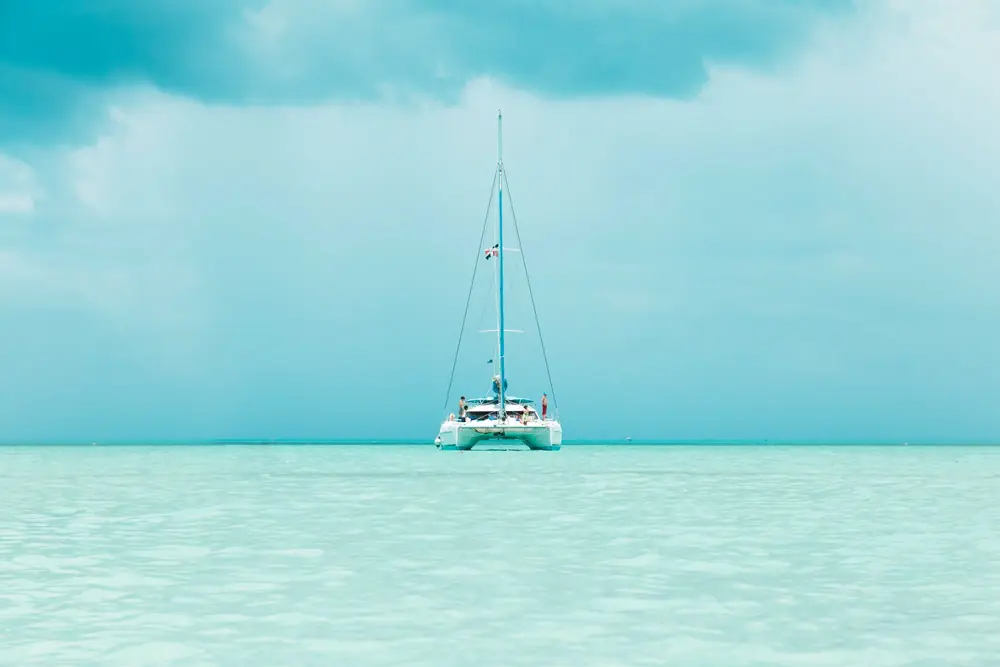
Punta Cana · Photo: Leonardo Rossatti / Pexels
Starfish, coral, turtle shell and conch: the decrees
The ministry's guide to regulated coastal and marine species is the clearest official statement of the wildlife rules visitors run into (regulated species guide):
Starfish: the guide says many people touch starfish and take them out of the water for photos, which kills them from lack of oxygen, and that they are also collected for crafts. At the Palmillas sandbank (the 'natural pool'), stand still, look, and keep them underwater.
Turtle shell (carey): Decree 288-12 prohibits making, trading and selling crafts from hawksbill or other sea-turtle shell. The hawksbill is listed as critically endangered. Do not buy jewelry or combs sold as carey.
Coral: Decree 318-86 prohibits extracting and trading several coral genera in all Dominican waters. Black and red coral jewelry is the main market; skip it.
Conch (lambí): Decree 499-09 bans its extraction and sale during the breeding season, 1 July to 31 October. Several tour menus offer seafood lunches on the island; Quetzal, for example, stops its lobster upgrade from 1 March to 30 June (Quetzal). In conch season, ask what you are being served.
Bayahibe's 2024 enforcement measures, and what they mean for you
In November 2024 the Navy, the Ministry of Tourism, the environmental protection service SENPA, the tourist police POLITUR, hotel association ASONAHORES and the main Bayahibe operators agreed to tighten checks on the permits and authorizations from Mitur, Medio Ambiente and the Navy that every excursion needs, and set up a joint working group to reorganize the area. The Navy also reinforced the ban on repairing and painting boats within 60 metres of the high-tide line. The government puts Bayahibe at about a million tourists a year, 18% of all tourist visits to attractions in the country (Presidencia).
For a visitor, the useful takeaway is simple: book an operator that can show its tourism licence and Navy dispatch for the boat, and be wary of beach sellers offering a cheaper boat on the spot. The ministry's own Saona Sostenible project (2021–2024) also lists a new pier, upgrades to the Mano Juan and Catuano docks, reorganized gift shops and solid-waste management among its works, so expect the landing points to change.
Wildlife worth knowing before you go
The ministry has recorded 112 bird species inside the park, eight of them endemic to Isla Saona and eleven to the Caribbean, and names sea grape, bayahonda and mahogany as its signature plants. It calls Cotubanamá the protected area with the most visitors in the country (Medio Ambiente). A quieter boat, an early departure and a walk away from the main beach give you the best chance of seeing more than the crowd.
Ceremonies and private events on the island
Small ceremonies happen on Saona through licensed operators: Caribbean Wedding Agency publishes a Saona Island package at US$2,750 for two people, which it describes as about 1 hour 15 minutes by road plus a 40-minute boat ride from Bávaro (Caribbean Wedding Agency). The park rules above apply to every guest, and anything built on the beach (arches, décor) has to leave with you. Our eloping in the Dominican Republic guide compares Saona with other small-wedding options.
What we left out
Several travel sites list further rules (no chemical sunscreen, no drones, no single-use plastic, fines at the natural pool). We could not find those in an official Medio Ambiente text, so we do not present them as law. They are still good practice. We also found no official published maximum number of boats or visitors per day for Saona.
Providers compared
| Listing | Location | What they offer | Published price |
|---|---|---|---|
| SeavisTours | Bayahibe | Saona Crusoe VIP, Saona Special half-day, Jungle Eco Tour (Padre Nuestro trail, cave swim, Río Chavón) | On request |
| Caribbean Saona | Bayahibe / La Romana | Daily Isla Saona trips from Bayahíbe with own fleet: natural pool, Dominican buffet and private beach | On request |
| Quetzal Catamaran Excursions | Bayahibe | Small-group Saona & Catalina catamaran trips, private charters, buggy & land tours | Day Trip Saona Island (Quetzal boat): US$159 |
| Pro Excursions Bayahibe | Bayahibe | Saona & Las Palmillas catamaran trips, boat charters, hotel transport | Saona Prestige: US$165/adult regular (US$149 internet rate), US$99/child under 12 |
| Saona Travelers | Bayahibe | Isla Saona regular, VIP, catamaran and private speedboat tours from Bayahibe, La Romana, Punta Cana and Santo Domingo | On request |
Key facts by provider
- SeavisTours: Family-owned since 1999; Saona Crusoe VIP by speedboat to Mano Juan, sea-turtle project, Canto de la Playa and the natural pool; languages: English, German, Spanish, Dutch
- Caribbean Saona: Sailing to Saona since 2010 with boats Neya, Ana Victoria and Brianna
- Quetzal Catamaran Excursions: capacity: Private motor catamaran up to 60; 43-ft sailing boat up to 10; speedboat up to 6; languages: English, French, Spanish (site languages)
- Saona Travelers: Bayahibe-based operator; departures from Santo Domingo, Punta Cana, La Romana and Bayahibe around 6 am, back 5–6 pm; lunch, drinks and hotel pickup options
Related listings & add-ons
How much is the Saona Island park fee?
RD$250 per person, the same for Dominicans and foreigners, per the Ministry of Environment's SINAP system (checked 19 October 2026). Most tours include it.
Can I touch or hold the starfish at the natural pool?
No. The Ministry's regulated-species guide warns that taking starfish out of the water for photos kills them through lack of oxygen (Medio Ambiente).
Is it legal to buy turtle-shell or coral souvenirs?
No. Decree 288-12 bans making and selling turtle-shell crafts and Decree 318-86 bans extracting and selling coral.
Sources
- https://sinap.ambiente.gob.do/
- https://ambiente.gob.do/medio-ambiente-implementa-proyecto-en-la-isla-saona-que-garantiza-su-proteccion-y-sostenibilidad/
- https://ambiente.gob.do/portal-transparencia/wp/download/33/leyes/392/ley-no-202-04-areas-protegidas-y-de-las-areas-especiales.pdf
- https://ambiente.gob.do/wp/download/2115/oceanos-costas-y-mares/295312/guia-informativa-de-especies-costeras-y-marinas-reguladas-2.pdf
- https://presidencia.gob.do/noticias/adoptan-medidas-para-fortalecer-el-orden-y-la-seguridad-de-las-operaciones-turisticas-en
- https://www.diariolibre.com/actualidad/en-bayahibe-realizan-paro-de-transporte-por-incremento-de-costos-de-ingreso-al-parque-nacional-del-este-JJ6803920
- https://infoturdominicano.com/rd/ministerio-de-medio-ambiente-deja-sin-efecto-aumento-en-tarifas-a-parques-nacionales-tras-reunion-con-touroperadores/
- https://seavisbayahibe.com/prices-booking.html
- https://caribbeansaona.com/
- https://quetzalexcursions.com/
- https://wedding-caribbean.com/intimate-weddings/
Next step
Ready to book?
Compare operators' cited prices and book direct.
⏱ We reply within 24h. Free. No spam.